Product images · · 3 minute read
AI product photography: when it works
Kristian Kostov · Thessaloniki
Short answer
AI product photography works when you start from a real photo and only change the background or the light. It fails when the tool invents a label, a color, or a shape you do not sell.
AI product photography is useful when the picture still looks like the product you sell. The tools are fast. They are also eager to invent a bottle, a label, or a material you do not have in stock.
How to use AI for product photography
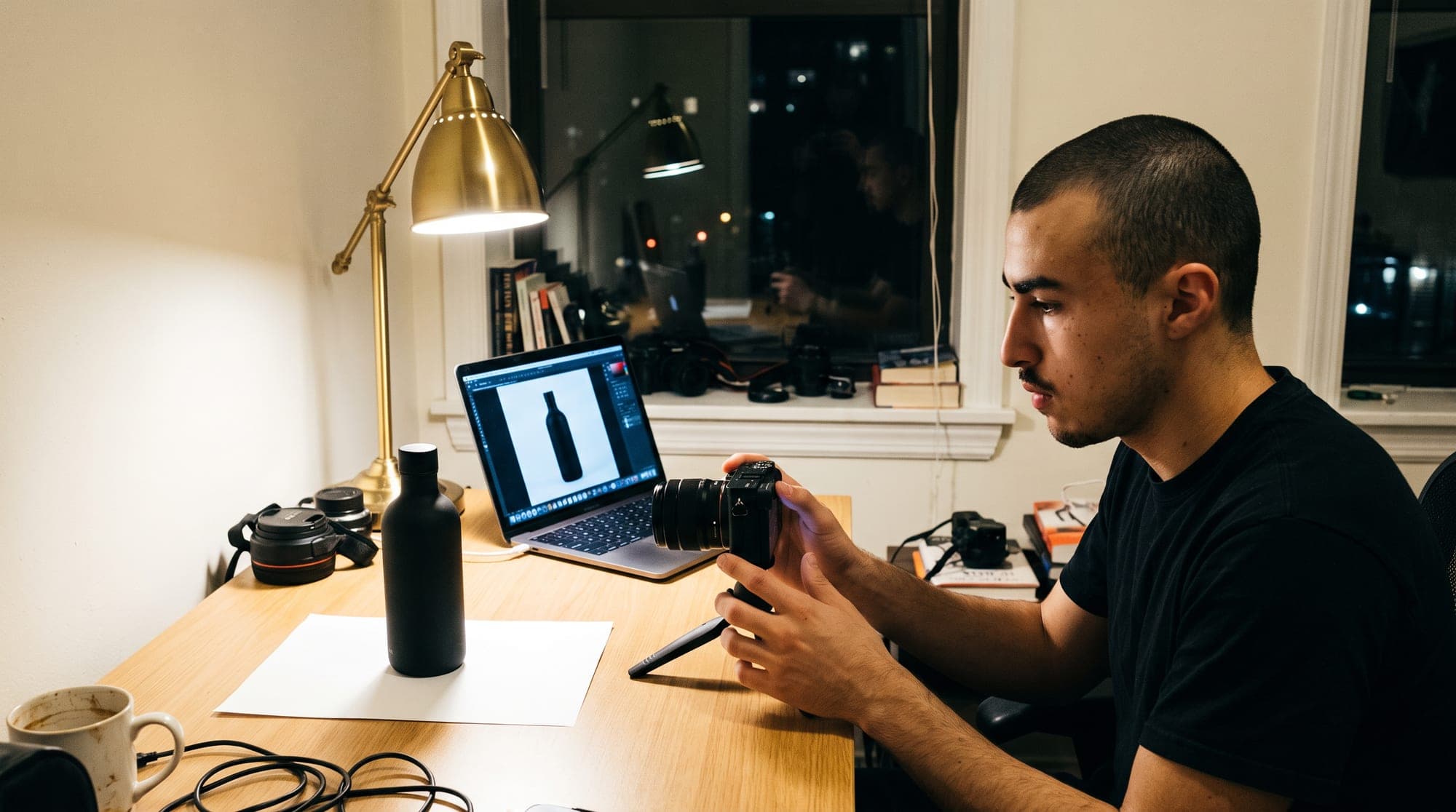
Start from the real thing. A photo, a pack shot, or a measured reference. Then change the part that needs changing: the background, the light, a simple scene. Leave the product alone.
Before a frame is allowed on a site, I check four things. The label text is the real label. The color matches the unit in your hand. Edges and reflections behave like that material. The shape was left as it is, including the awkward parts.
An AI product photo generator is a production tool in that workflow. The model proposes frames. A person who has seen the product decides which ones are true.
AI product image generator: free or paid
Product photography AI tools range from free to paid, and AI for product photos is only as good as the reference you feed it. Free AI product photography exists, and it is fine for testing a background or a mood. Free tiers tend to add watermarks, limit resolution, or give you little control over the product itself. For a live catalog, pay for a tool that keeps your reference photo intact and exports a file you can actually use.
When an AI product photo is the wrong tool
- Jewelry and cosmetics, where a small change in shape is a different product
- Food, if you cannot keep the real color
- Anything with a regulated label, where a generated claim becomes your problem
- A hero image for a product you have not photographed at least once
Photography still wins when touch is the point. Generation wins when you need several scenes and you already have a true reference. I use them next to each other on product images. The shooting list for the real photos is in ecommerce product photography.
The best AI tool is the one you can reject
People ask for the best AI tool for product photography. The tool matters less than the reference photo and the person checking the result. Free tiers exist. A usable catalog is still a review job, because most of the frames will have changed something you needed to keep.
The picture also has to match the rest of the page. Same crop logic, same background family, same level of honesty. A polished generated hero on a catalog of phone photos looks like two shops. If you want frames for a launch, send the product and the pages they have to live on.
FAQ
- What is AI product photography?
- Using image generation or AI editing to make product pictures, usually a new background, light, or scene, while the product itself stays accurate.
- Is AI product photography free?
- Many tools have a free tier. A catalog you can publish is a review job on top of that. Someone has to throw out the frames that changed the product.
- What is the best AI tool for product photography?
- Whichever tool keeps your reference intact and lets you discard a bad frame quickly. The reference photo and the review matter more than the brand name on the generator.